KGB
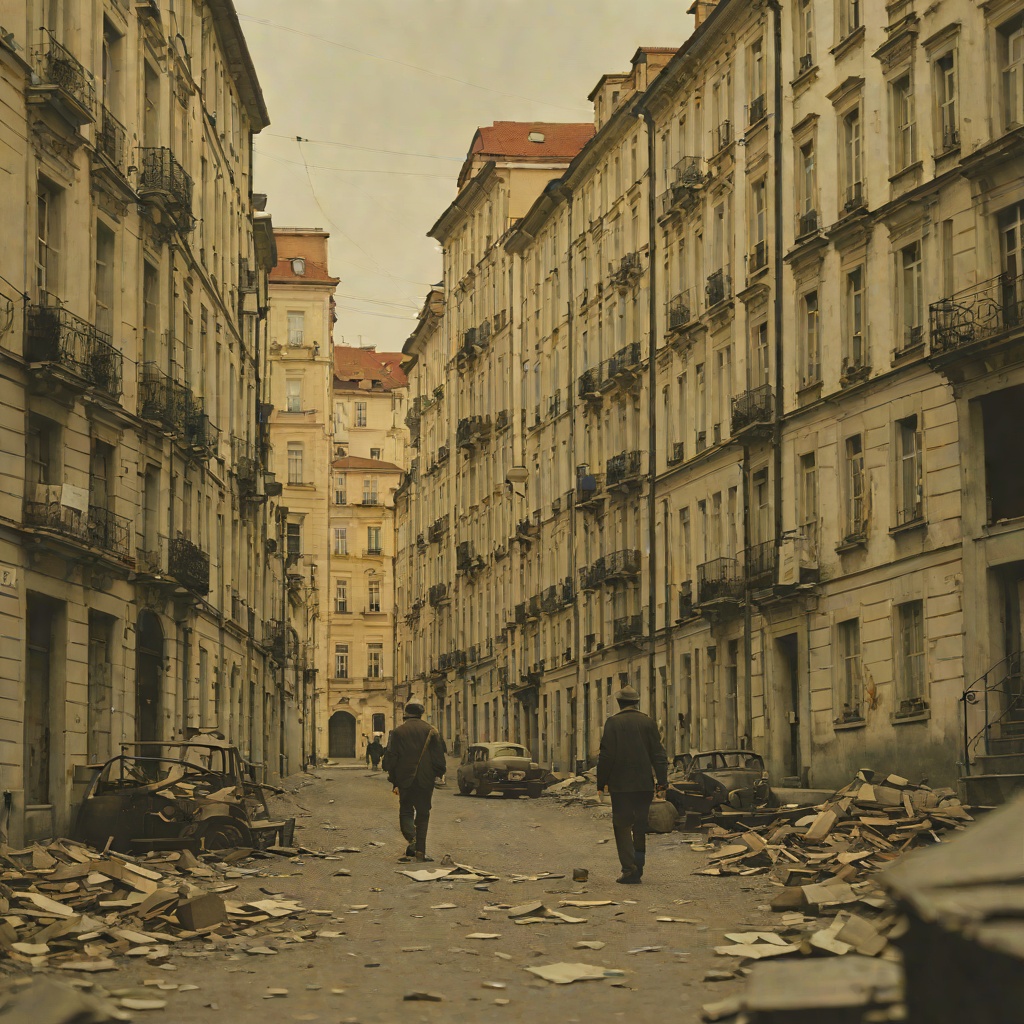
City of GodThe KGB enters the novel not as the feared instrument of Soviet repression but as a decaying post-Soviet institution, its vaults reduced to a kind of flea market where anything can be purchased if the price is right. Pem describes Moscow as "a really interesting place right now," and the KGB's archives as a place where the Russians "swept up anything that might conceivably be of importance, even though ninety-nine times out of a hundred they would never look at it again." The organization's power has inverted: once the state's all-seeing eye, it now sells what it once hoarded, its secrets available to any buyer with sufficient funds.
The Recovery of the Barbanel Archive
Pem's penetration of the KGB is the means by which the Barbanel ghetto archive is recovered. The chest containing the archive is impounded at JFK Airport until Pem can arrange for a United States Department of Justice attorney to be present when it is cracked open, as customs has insisted it must be. The archive is believed to contain documentary proof of the identity of the ghetto commander, S.S. Major Schmitz, and so the circumstances of its unsealing must be irreproachable if it is to resist a challenge in court. The arrangements take the better part of two weeks before the day of the unsealing arrives.
Pem's Penetration of the KGB
Pem's method of penetrating the KGB is a performance of multiple identities. He flew into Moscow, made calls, and "spoken as a priest to the fathers, a diplomat to the attachés, a con man to the hustlers." He flashed his roll, laid on a lot of attitude, and fearlessly penetrated the organization. His training as the Divinity Detective, he says, stood him in good stead. Yet the ease of the operation raises doubts in his own mind: the KGB officers were "all like beggars with their hands out," and Pem wonders whether his act was at heart no more than a seductive stunt.
The Adventurer's Contrition
Pem's own assessment of his KGB exploit is harsh. As an act of contrition, he reflects, it hardly qualified; it was an adventurer's act of contrition. Riding out to JFK with Sarah Blumenthal on a rainy late weekday morning, his new triumphalist self-regard is absent, and the old familiar bleakness rises behind his eyes. He wonders if he is incapable of an act that does not contain its own corruption. The airport road system, with its curves, forks, and ramps, seems to constitute another kind of city, a city of unearthly scale whose denizens are huge flying machines, one of which emerges from the overcast and roars overhead with landing gear like talons. The KGB, in this light, is not a triumph but a symptom of Pem's inability to act without corruption, a mirror of his own compromised motives.